
Intro
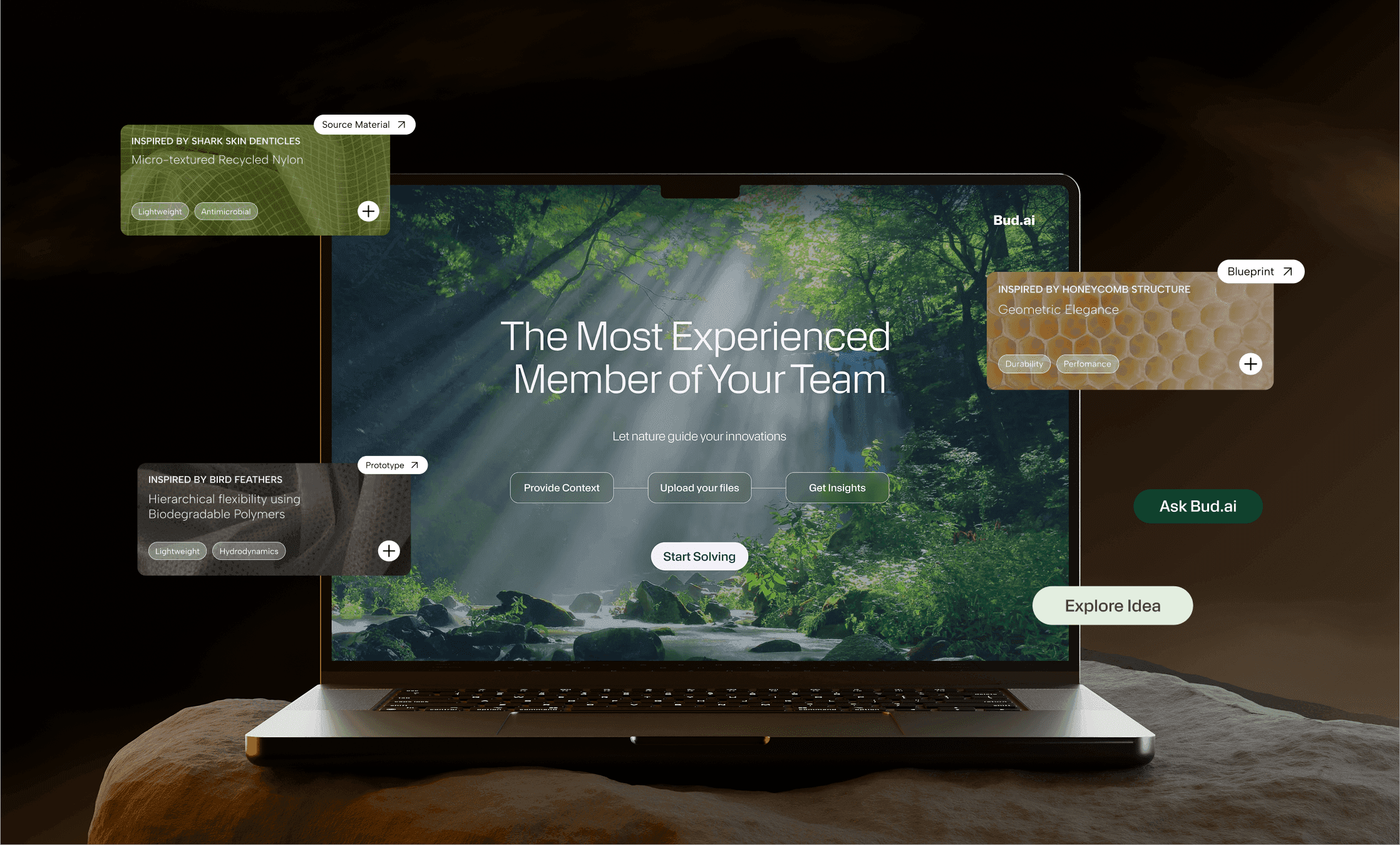
An AI-powered tool that helps innovators apply nature's insights to build sustainable products and systems
I uncovered key friction points in applying biomimicry by interviewing industrial designers. I turned those insights into a product experience that embeds actionable insights directly into existing workflows.
- Role
- Product Designer
- Duration
- 4 Weeks
- Team
- 3 Designers + me
- Skills
- User Research Prototyping Interaction Design

How do we use AI to make taking inspiration from nature an integral part of the innovation process?
At a Glance
An AI tool that translates biological patterns into design insights for product teams
Discovery
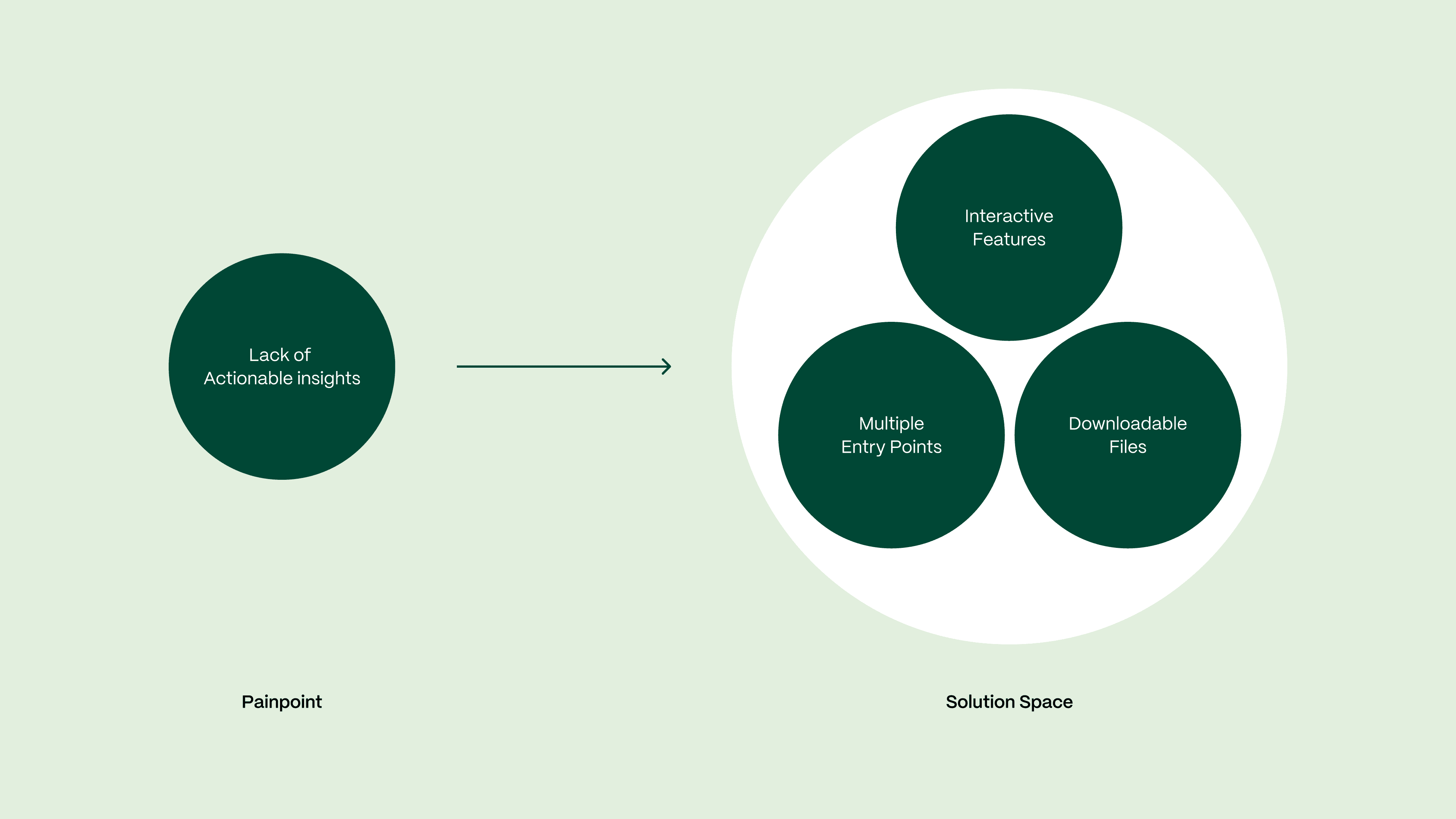
Biomimicry is an interdisciplinary field that requires specialized knowledge, creating a barrier between innovators and nature
Scattered Information
Users have to jump between databases, research papers, and design platforms.
Interdisciplinary Knowledge
Existing databases require extensive understanding which is hard for non-experts.
Generalized Solutions
Platforms don't always deliver applicable, cross-disciplinary solutions.
The barrier to entry was simply too high. What if we could change that?
We saw this firsthand while working with product designers and engineers who struggled to apply nature-inspired principles to their work.
Process
Exploring how we can integrate biomimicry guidance into every stage of the process through the interface
From defining the problem, to offering guidance during design, testing and validation, we had to ensure that biomimicry is integrated into every aspect of the workflow.
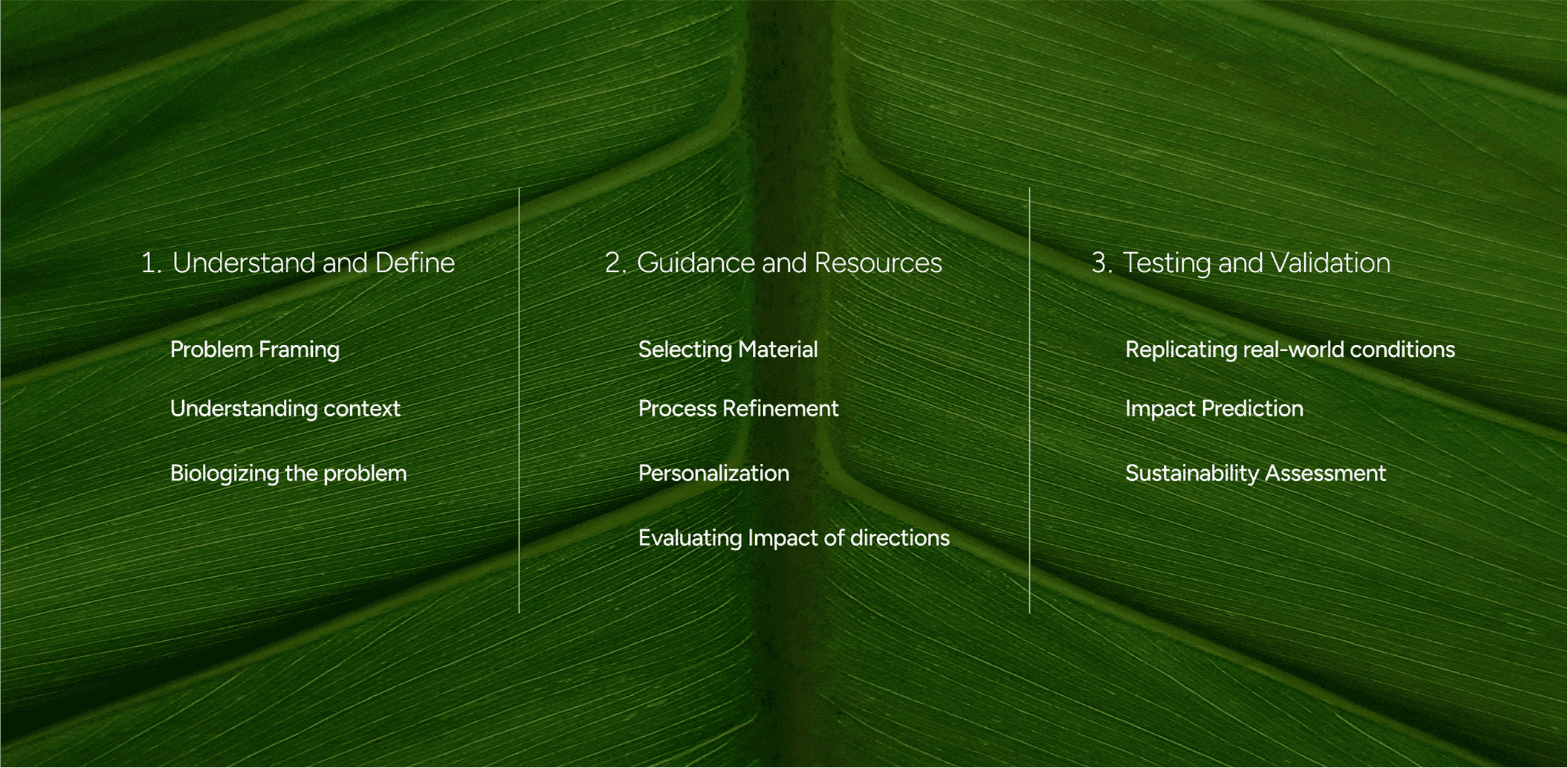
After outlining Bud.ai's capabilities across each stage of the innovation process, I iterated on the interface through increasing levels of fidelity to explore the optimal information architecture and structure.
Solution
Bud.ai fits into design and engineering teams and has the ability to act as an interdisciplinary collaborator
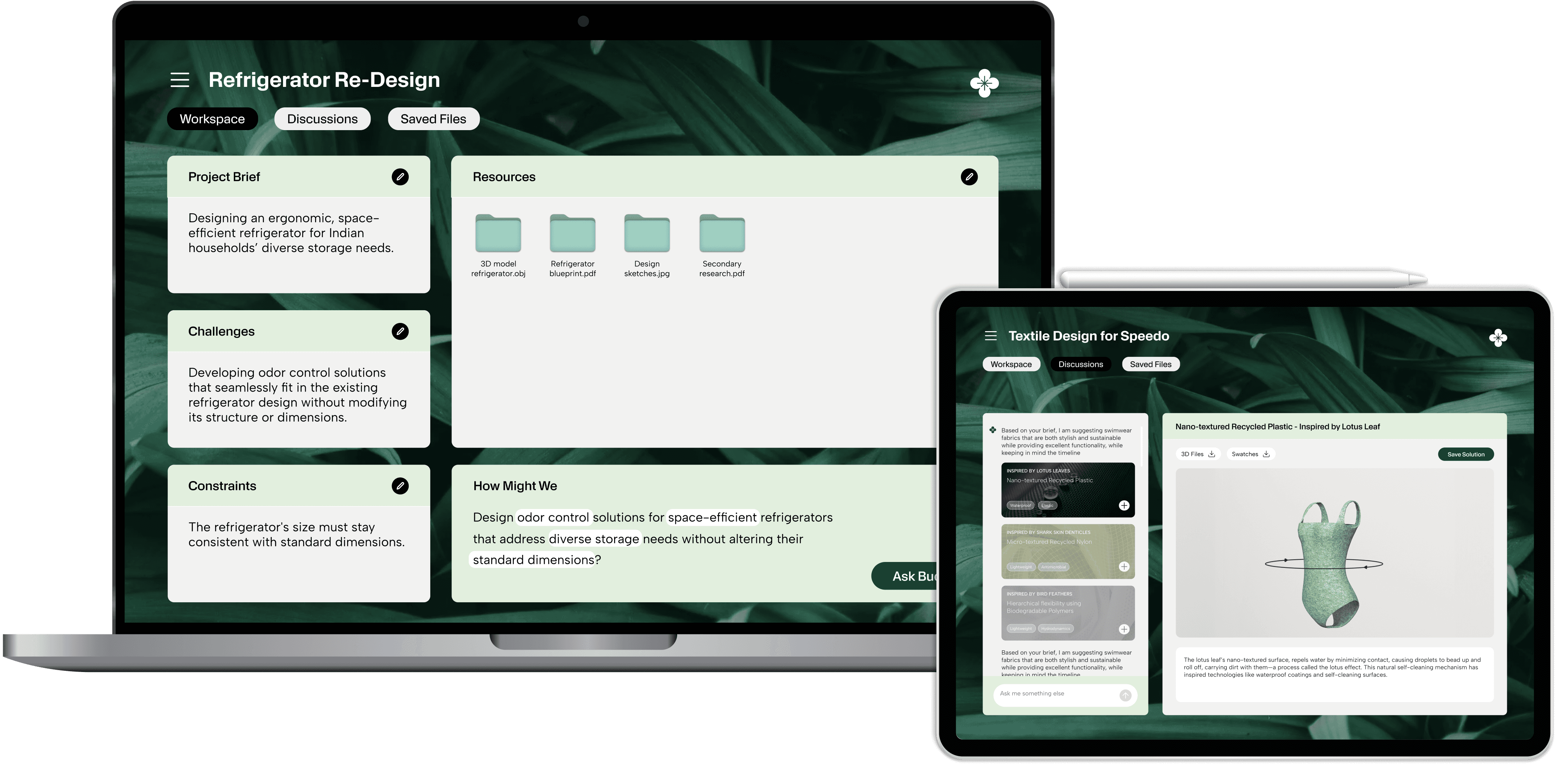
Whether you're sketching initial concepts or refining final prototypes, Bud's suite of interactive tools — from advanced prompting controls to downloadable files — seamlessly integrates into your workflow.
To begin a project, use the robust input framework to enter your project specifications
We have thoughtfully designed each input field to provide context for your project. You can also upload files to help Bud understand exactly where you are in the process.
Bud compiles everything into one flexible workspace, where you can edit, change, or add elements anytime.
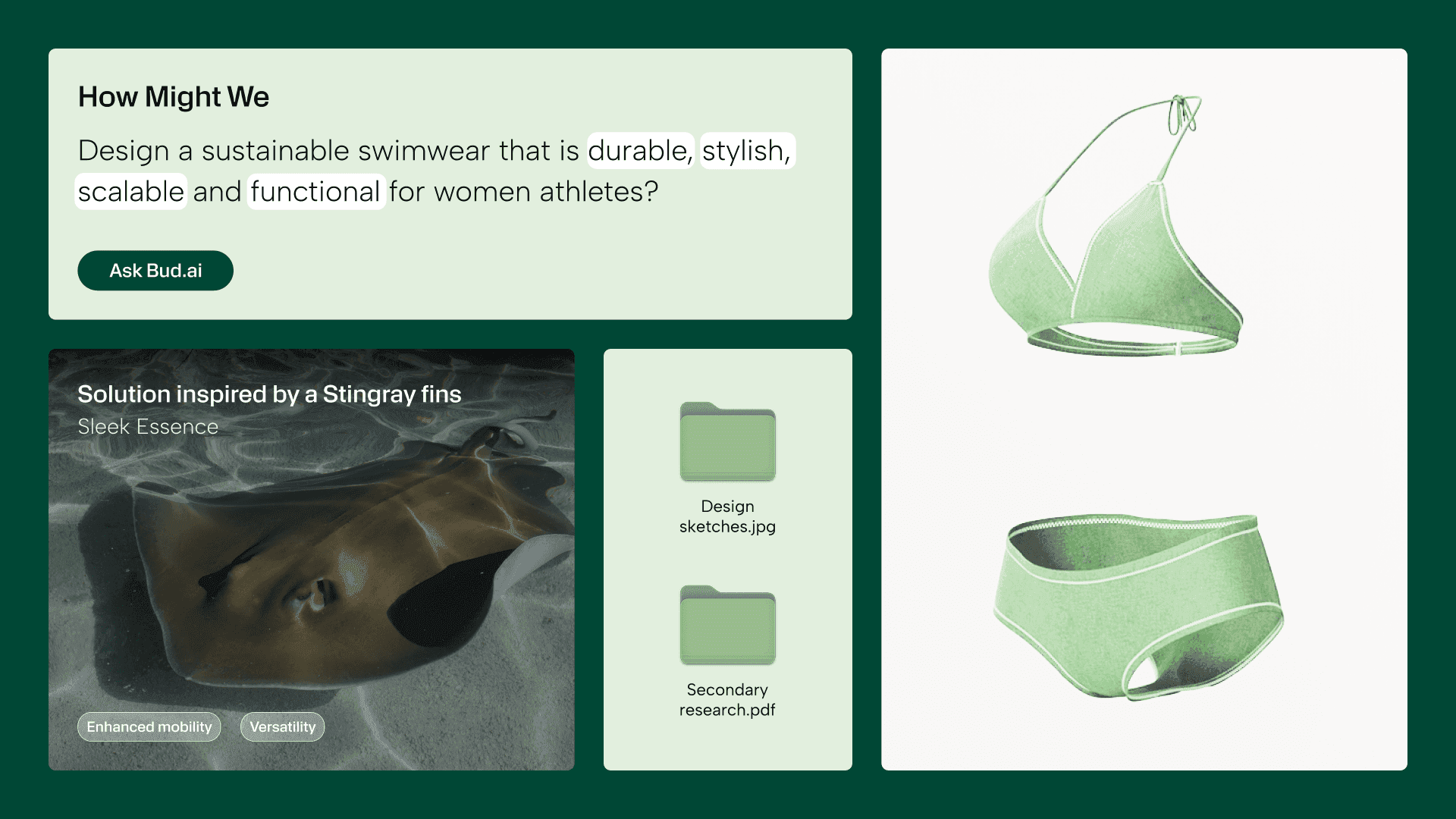
With a click, Bud proposes three swimwear ideas inspired by nature
Bud generates interactive 3D models, helps you iterate through smart prompting, and evolves with your ideas.
Troubleshooting an existing design? Bud.ai has got you covered
It can propose solutions taking into consideration text, images, and even technical blueprints. You can pick back up from wherever you left off, and Bud remembers your needs.
Reflection
Designing UX for AI isn't just about making something intelligent — it's about making it something truly useful and actionable in real situations
Designing UX for AI-powered products
I learned that transparency, context, and timing are crucial when embedding AI into creative workflows, especially for interdisciplinary users. Having an input framework was key to streamlining workflows by reducing repetitive back and forth between the user and the AI interface.
What's next for Bud.ai
The next step is integrating Bud.ai into existing design tools through plugins, meeting users directly in their preferred environments. We're also focused on strengthening the solution exploration canvas and running real-world tests to better understand its impact and refine its capabilities.